Home
About Us
Company profile
Enterprise culture
News Center
Honor Qualification
Products
High temperature alloy coarse wire
Iron-base alloy
Nickel base alloy
Iron chromium aluminum foil
Copper-nickel alloy
Magnetic temperature compensation alloy
Quality Control
Manufacturing capacity
Quality control system
Sales Network
Contact Us
Contact Information
Online message
中文版
English
Industry News
Company News
Complete knowledge of nickel base alloys you don't know
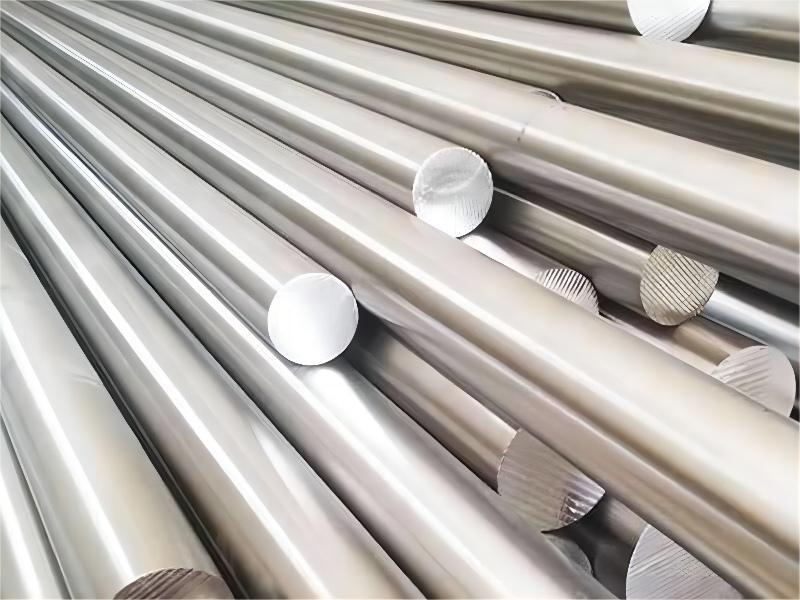
An alloy made of nickel and other elements is called nickel alloy. Nickel has good mechanical, physical and chemical properties. Adding appropriate elements can improve its oxidation resistance, corrosion resistance, high temperature strength and some physical properties. Nickel alloys can be used as materials for electronic tubes, precision alloys (magnetic alloys, precision resistance alloys, electrothermal alloys, etc.), nickel base superalloys, nickel base corrosion resistant alloys and shape memory alloys. Nickel alloys are widely used in energy development, chemical industry, electronics, navigation, aviation and aerospace.
23
2021
/
07
You don't know the nickel base alloy knowledge book
Nickel-based alloys composed of other elements are called nickel alloys. Nickel has good mechanical, physical and chemical properties, adding suitable elements can improve its oxidation resistance, corrosion resistance, high temperature strength and improve some physical properties. Nickel alloys can be used as materials for electronic tubes, precision alloys (magnetic alloys, precision resistance alloys, electric heat alloys, etc.), nickel-based high-temperature alloys, nickel-based corrosion-resistant alloys, and shape memory alloys. Nickel alloys are widely used in energy development, chemical industry, electronics, navigation, aviation and aerospace.
What are the classification and characteristics of nickel base corrosion resistant alloys?
Nickel base alloy is a kind of alloy with high strength, oxidation and corrosion resistance at 650 ~ 1000 ℃. According to the main properties, it is subdivided into nickel base heat resistant alloy, nickel base alloy, nickel base alloy, nickel base precision alloy and nickel base shape memory alloy. According to the different matrix, superalloys are divided into iron-based superalloys, nickel based superalloys and cobalt based superalloys. Nickel base superalloy is called nickel base alloy for short.
What are the classification and characteristics of nickel-based corrosion resistant alloys?
Nickel-based alloys are a class of alloys that have high strength and oxidation corrosion ability at high temperatures of 650 to 1000°C. According to the main performance is subdivided into nickel-based heat-resistant alloys, nickel-based alloys, nickel-based alloys, nickel-based precision alloys and nickel-based shape memory alloys. High-temperature alloys are divided into iron-based high-temperature alloys, nickel-based high-temperature alloys and cobalt-based high-temperature alloys according to the different substrates. Among them, nickel-based high-temperature alloys are referred to as nickel-based alloys.
Performance comparison between pure nickel and copper nickel alloy
Nickel alloy is widely used in desulfurization industry. The main reason is that it has strong acid resistance and strong corrosion resistance to halogen ions. The corrosion resistance of various nickel alloy materials varies with the content of alloy elements.
Performance comparison of pure nickel and copper-nickel alloy materials
Nickel alloy materials are widely used in the desulfurization industry, the main reason is that it has strong acid resistance and strong corrosion resistance to halogen ions. The corrosion resistance of various nickel alloy materials varies with the content of alloying elements.
History of nickel base alloys
Since World War II, "superalloy" has been used to describe a group of alloys developed in turbochargers and aircraft turbine engines, which need performance at high temperatures. The application of superalloys has been extended to many other fields, including aircraft and land-based gas turbines, rocket engines, chemical and petroleum plants. They are suitable for these demanding applications. Alloys are based on VIIIB group elements and are usually composed of various combinations of Fe, Ni, CO and Cr and small amounts of W, Mo, Ta, Ti and al. The three main alloys are nickel, iron and cobalt based alloys. Next, xincoral Xiaobian will share with you the development of nickel base alloy.
History of Nickel-Base Alloys
Beginning in World War II, "superalloy" was used to describe a group of gold developed in turbochargers and aircraft turbine engines. These alloys required high performance at high temperatures. Applications of superalloys have expanded to many other areas, including aircraft and land-based gas turbines, rocket engines, chemical and petroleum plants. They are particularly suitable for these demanding applications. Superalloys are based on group VIIIB elements, and generally consist of various combinations of Fe,Ni,Co, and Cr with small amounts of W,Mo,Ta,Nb,Ti, and Al. The three main superalloys are nickel, iron, and cobalt-based alloys. The following Xin coral Xiaobian to share with you the development of nickel-based alloys.
What is the difference between nickel base alloy and ordinary stainless steel?
In fact, in essence, nickel base alloy is also a kind of stainless steel. It is just a special stainless steel. Its chemical composition is also different from that of ordinary stainless steel. Nickel base alloy is a high alloy stainless steel containing high nickel, high chromium and high molybdenum.
What is the difference between nickel-based alloys and ordinary stainless steel?
In fact, in essence, nickel-based alloy is also a kind of stainless steel, but it is a special stainless steel, and the chemical composition of ordinary stainless steel is also different. Nickel-based alloy is a kind of high-alloy stainless steel containing high nickel, high chromium and high molybdenum.